On June 26, Tokyo University of Agriculture and Technology announced that they recorded a male wild boar exhibiting mating behavior with the corpse of a female wild boar in the wild.
Mating behavior with the corpses of the same or closely related species is globally rare, marking the 11th case among mammals, the 4th case among terrestrial mammals, and the first case among ungulates.
Finding animal corpses in nature is difficult, and there are many gaps in knowledge regarding the reactions of wild animals to the corpses of their own species, both in ecological studies focusing on the decomposition process and in thanatology examining animals' views on life and death.
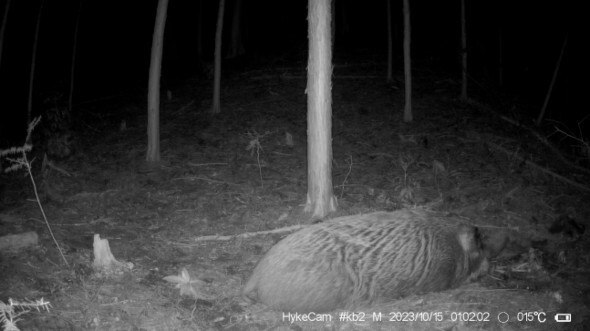
Therefore, the research team set up the corpse of a female adult wild boar in a forest in Nikko City, Tochigi Prefecture, from October 1 to November 11, 2023, and recorded the process of skeletal decomposition using a sensor camera that automatically captures still images and videos by detecting animal heat.
The footage captured by the camera showed three wild boars approaching the corpse.
One male adult boar visited the corpse 12 times over a period of 13 days from October 6 to 18.
A detailed analysis of this male's behavior revealed that it exhibited mating behavior towards the female corpse during its first and second visits (both on October 6).
The male not only engaged in mating behavior but also continued to show interest in the corpse by stepping on it and resting nearby until it decomposed and became skeletal.
While it is known that wild boars occasionally cannibalize the corpses of their own species, none of the individuals in this case consumed the corpse.
Additionally, the remaining two individuals that approached the corpse did not exhibit the same persistent interest behavior as this male, indicating that there are individual differences in reactions to the corpse.
Wild boars are social ungulates widely distributed around the world, but their social structure is simpler compared to primates and cetaceans, and they do not engage in extensive child-rearing.
Research in thanatology has primarily focused on animals with complex social structures, and wild boars have not been a subject of study until now.
Moreover, this is merely a single case, and it remains unclear why the male engaged in mating behavior with the female corpse or what purpose the persistent interest behavior served.
Nevertheless, the research team believes that systematically collecting such cases will contribute to clarifying reactions to corpses, and they emphasize the need to accumulate and compare observational data across various taxonomic groups and animal species.
Furthermore, the research team indicated that the usefulness of sensor cameras in thanatology research was also demonstrated in this investigation.
It has already rapidly spread as a photographic method in the field of ecology, and the amount of data being collected has become enormous.
Such data is expected to provide important insights into thanatology, and there are hopes for the advancement of future research.
The research findings were published online on June 16 in the American journal of ecology, "Ecology and Evolution."